
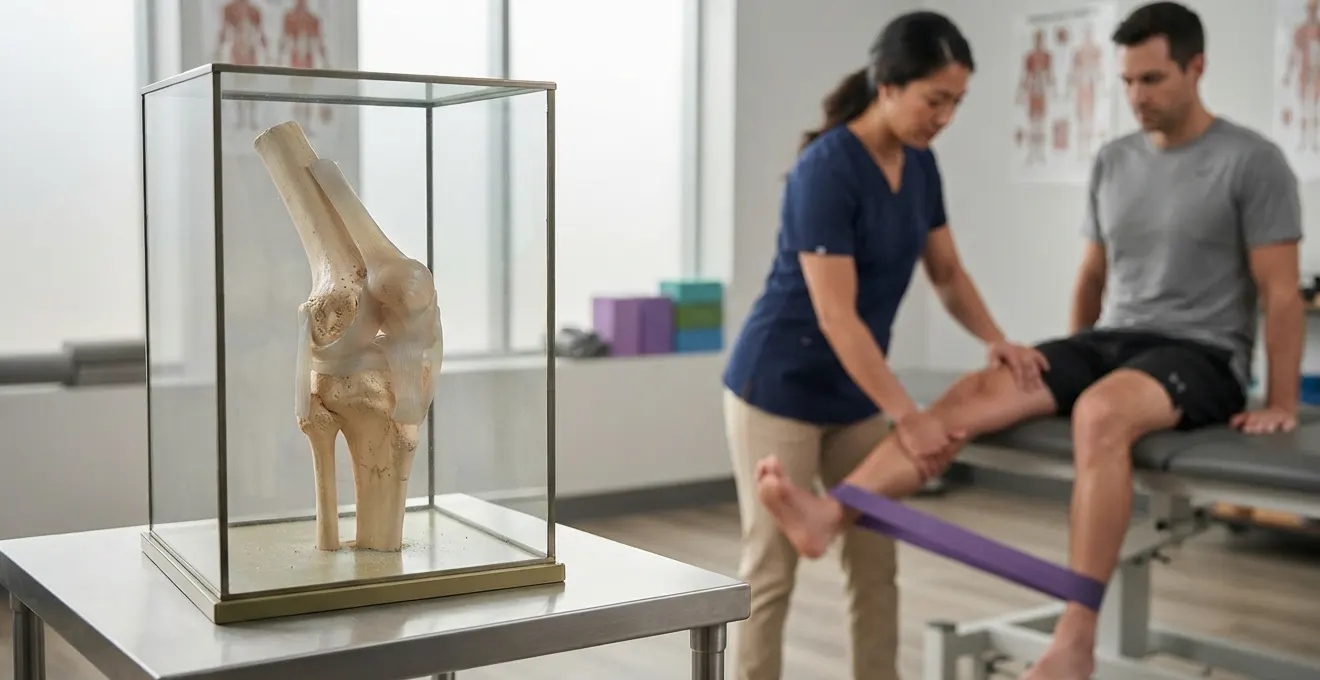
Clinical evidence has evolved considerably over the past decade. Cochrane systematic reviews comparing surgical and conservative interventions reveal that outcomes depend less on the treatment itself and more on who receives it. A 22-year-old footballer and a 52-year-old office worker with identical MRI findings require fundamentally different approaches, yet both pathways can succeed when properly matched to patient profile.
The UK healthcare landscape presents additional considerations. NHS waiting times for ACL reconstruction typically extend 12 to 18 weeks from GP referral to theatre, creating a natural trial period during which structured physiotherapy can be initiated. Some patients discover their knee stabilises sufficiently to avoid surgery altogether; others use this window to optimise strength before reconstruction. Understanding which pathway suits specific injury characteristics, activity demands, and life circumstances enables informed choice rather than reactive decision-making driven by fear or urgency.
Treatment decisions depend fundamentally on matching intervention to patient profile. A complete ACL rupture in a 22-year-old footballer and the same injury in a 52-year-old office worker appear identical on MRI, yet require fundamentally different treatment approaches based on activity demands and functional goals.
Neither surgical nor conservative management represents a universally superior choice. Clinical outcomes depend less on the treatment modality itself and more on selecting the pathway aligned with injury severity, athletic demands, and realistic rehabilitation commitment.
Your ACL treatment decision essentials
- Not all ACL tears need surgery—treatment depends on activity level and injury severity
- High-demand athletes pursuing pivoting sports typically require reconstruction
- Conservative physiotherapy can succeed for low-demand or older patients
- Surgical recovery requires 9 to 12 months before return to competitive sport
- Delaying surgery by 3 to 6 months to trial rehabilitation does not worsen outcomes if reconstruction becomes necessary later
ACL tear severity: does every rupture need surgical repair?
The assumption that all ACL tears mandate immediate surgery represents outdated thinking. NHS treatment guidance clarifies that surgical intervention is indicated for patients who play significant amounts of sport and wish to continue at similar levels, or for those experiencing persistent knee problems after physiotherapy trial. This criterion-based approach recognises that ligament reconstruction, whilst highly effective for appropriate candidates, exposes patients to anaesthesia risk, graft failure potential, and a minimum 9-month rehabilitation commitment.
- High-demand athlete (age under 35, competitive pivoting sports):
Complete ACL tear confirmed on MRI, goal to return to football, rugby, skiing, basketball or similar activities, experiencing giving-way episodes during changes of direction. Recommendation: Surgical reconstruction typically advised—conservative management shows high failure rates in this profile.
- Recreational athlete (age 25 to 50, moderate activity):
Partial or complete ACL tear, running, cycling, or gym-based fitness goals, willing to modify activities and commit to structured rehabilitation protocols. Recommendation: 3 to 6 month physiotherapy trial represents reasonable first approach—surgery remains option if instability persists.
- Low-demand patient (age over 45, sedentary to light activity):
Complete ACL tear with minimal functional instability during daily activities, walking and household tasks primary concern, no sporting goals involving cutting or pivoting movements. Recommendation: Conservative management with physiotherapy often successful—surgery reserved for persistent instability affecting quality of life.
High-demand athletes: when reconstruction becomes essential
Competitive athletes face a stark reality: the forces generated during pivoting, cutting, and landing movements exceed what muscular compensation can control in an ACL-deficient knee. Determining when is an ACL operation needed ? requires assessment of sport-specific demands, competitive level, and tolerance for recurrent instability episodes. Young athletes under 25 demonstrate particularly high failure rates with conservative management when attempting return to pre-injury sport intensity.
Moderate activity levels: the trial rehabilitation window
Recreational athletes occupy a middle ground where either pathway can succeed. A structured 3 to 6 month physiotherapy programme focusing on quadriceps strength, proprioceptive retraining, and neuromuscular control allows functional assessment under real-world conditions. Patients who achieve stable knee function during running, gym work, and moderate sports activities may continue conservative management indefinitely with appropriate activity modification.
Low-demand patients: successful non-operative outcomes
Clinical practice demonstrates that older patients with lower activity demands frequently achieve satisfactory knee function without reconstruction. The sedentary 55-year-old whose primary concern is navigating stairs and walking the dog faces minimal risk from conservative management, provided rehabilitation addresses quadriceps weakness and teaches compensatory movement patterns that protect the knee during daily activities.
Comparing outcomes: surgical reconstruction versus rehab-only management
Evidence-based comparison between treatment pathways reveals nuanced findings that defy simplistic “surgery is better” or “avoid the knife” narratives. Long-term studies tracking patients over 5 to 15 years post-injury demonstrate that optimal outcomes depend on matching treatment intensity to functional demands.
| Outcome measure | Surgical reconstruction | Conservative physiotherapy | Evidence quality | UK-specific notes |
|---|---|---|---|---|
| Return to pre-injury sport level (12 to 24 months) | Higher success rates for athletes under 25 years in pivoting sports | Variable outcomes; higher for straight-line activities than pivoting sports | High (systematic reviews) | NHS rehab protocols available both pathways |
| Knee stability (objective testing) | 85 to 90% achieve normal or near-normal stability | 60 to 70% with structured protocols | High | Follow-up via NHS physiotherapy |
| Secondary meniscal injury risk | Reduced due to restored stability | Elevated if instability persists | Moderate | MRI reassessment available via NHS if symptoms worsen |
| Long-term osteoarthritis (15 years post-injury) | 50 to 60% develop changes | 60 to 70% develop changes | Moderate (longitudinal studies) | Neither pathway fully prevents risk |
| Treatment access timeline | NHS: 12 to 18 weeks; Private: 2 to 4 weeks | Immediate (NHS physiotherapy referral) | UK pathway data | Private surgery costs £8,000 to £12,000 if bypassing NHS wait |
The Cochrane systematic review examining surgical versus conservative interventions found no significant difference in patient-reported knee function at 2 and 5 years, challenging assumptions about surgical superiority. The critical qualifier: many participants initially allocated to conservative treatment subsequently opted for delayed reconstruction due to persistent instability, suggesting that non-operative management serves as an effective screening mechanism rather than definitive solution for all patients.
Attention: If recurrent episodes of knee giving way occur despite physiotherapy, continuing without surgical intervention risks secondary damage to meniscal cartilage and joint surfaces. Each instability event can cause cumulative injury that accelerates osteoarthritis development and may complicate delayed reconstruction. Persistent functional instability warrants re-evaluation with an orthopaedic consultant.
Post-traumatic osteoarthritis represents the sobering long-term complication affecting 50 to 70% of ACL-injured knees by 15 years post-injury, regardless of treatment choice. Surgery may moderately reduce this risk by preventing secondary meniscal damage, but cartilage injury sustained at the moment of initial ligament tear appears more predictive of arthritic changes than subsequent treatment pathway. Untreated ACL instability can contribute to altered biomechanics affecting the entire lower limb, potentially causing body pains at work as compensatory movement patterns strain hips, lower back, and contralateral knee during prolonged standing or repetitive tasks.
What ACL reconstruction actually involves
Modern ACL surgery bears little resemblance to the invasive open procedures of previous decades. Arthroscopic reconstruction performed through small portal incisions allows surgeons to visualise the knee joint interior via camera whilst replacing the torn ligament with a tissue graft. The procedure typically requires 60 to 90 minutes of operating time and is increasingly performed as same-day surgery in UK NHS and private settings.
Graft selection: your own tissue versus donor options
Surgeons harvest replacement ligament tissue either from the patient’s own tendons (autograft) or from donor tissue (allograft). Hamstring tendon autograft using semitendinosus and gracilis tendons offers lower donor-site pain and faster initial recovery, making it preferred for younger athletes. Patellar tendon autograft, consisting of bone-tendon-bone construct, provides faster biological integration and remains the gold standard for contact sports despite higher risk of anterior knee pain. Quadriceps tendon represents an emerging option balancing graft strength with donor-site morbidity.
Arthroscopic technique and surgical duration
The surgeon creates small tunnels in the femur and tibia, positioning the graft to replicate the native ACL’s anatomical path. Advanced techniques including remnant preservation and anterolateral ligament reconstruction enhance rotational stability, particularly valuable for athletes whose sports involve rapid direction changes. The entire procedure unfolds via arthroscopic visualisation, limiting soft tissue disruption and enabling same-day mobilisation.
Same-day discharge and immediate post-operative phase
Patients enter hospital on the morning of surgery and typically discharge the same evening once anaesthesia effects resolve and basic mobility with crutches is demonstrated. The first 2 weeks focus on swelling management through ice and elevation, protected weight-bearing progression, and initiating range-of-motion exercises to prevent stiffness. Pain levels remain manageable with standard analgesics for most patients.
Recovery timelines and return to sport: realistic expectations
The question “when can I play again” dominates post-operative consultations, yet clinical rehabilitation evidence demonstrates that safe return to pivoting sports requires minimum 9 to 12 months post-surgery. This extended timeline reflects graft maturation biology—the transplanted tendon undergoes remodelling phases including initial necrosis, revascularisation, and gradual collagen reorganisation before achieving mechanical strength approaching native ACL properties.
-
Protected weight-bearing with crutches, range-of-motion exercises, swelling management -
Full weight-bearing achieved, quadriceps activation focus, stationary cycling introduced -
Proprioceptive training begins, swimming and low-impact cardiovascular exercise permitted -
Strength building phase, running progression on treadmill, agility drills commence -
Sport-specific training, plyometric exercises, psychological readiness assessment -
Return-to-sport testing (quadriceps strength exceeding 90% contralateral, hop test symmetry), gradual competitive return
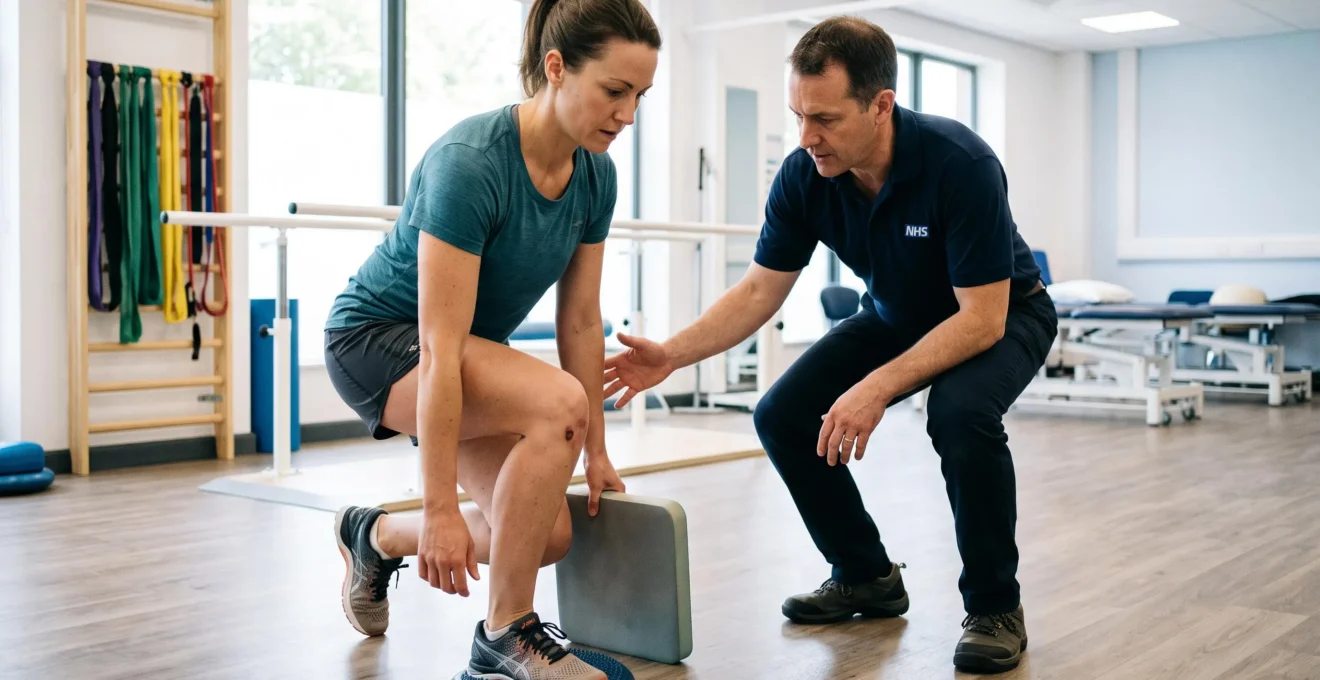
Conservative pathway timelines differ substantially. Patients attempting rehabilitation without surgery undergo functional assessment at 3 to 6 months to determine whether achieved stability permits activity resumption or whether persistent instability necessitates delayed reconstruction. Those achieving satisfactory function can resume many activities earlier than surgical patients, though pivoting sports may require permanent modification or abandonment. Once knee stability and strength benchmarks are achieved through either pathway, running can be safely resumed, with many patients returning to regular running 6 to 9 months post-surgery as part of long-term cardiovascular fitness maintenance.
Common questions about ACL treatment choices
Can a torn ACL heal on its own without surgery?
The ACL has extremely poor intrinsic healing capacity due to its position within the joint and limited blood supply. A completely torn ACL will not reconnect or repair itself. However, healing in functional terms—meaning the knee regains sufficient stability for activity needs through muscle compensation and physiotherapy—can occur in carefully selected patients, particularly those with low activity demands or partial tears.
How long can I delay surgery if I choose the conservative route first?
Evidence demonstrates that delaying reconstruction by 3 to 6 months to attempt structured physiotherapy does not compromise surgical outcomes if the operation ultimately becomes necessary. The critical factor is preventing recurrent instability episodes that could cause secondary meniscal or cartilage damage during the conservative trial period. Orthopaedic surgeons and physiotherapists monitor for these complications.
What are the success rates of non-surgical ACL treatment?
Success rates vary dramatically by patient profile. Studies indicate that outcomes for young athletes attempting pivoting sports differ substantially from older patients with low activity demands who often achieve satisfactory stability through rehabilitation alone. Success depends on willingness to modify activities, adhere to structured physiotherapy protocols, and accept some degree of functional limitation compared to surgical reconstruction.
Will I definitely develop arthritis if I do not have surgery?
ACL injury itself—regardless of treatment choice—significantly elevates osteoarthritis risk. Research indicates 50 to 70% of ACL-injured knees show radiographic arthritis changes by 15 years post-injury, whether surgically reconstructed or managed conservatively. Surgery may slightly reduce this risk by restoring stability and protecting the meniscus, but it does not eliminate the long-term complication. Associated cartilage damage at the time of initial injury appears more predictive of arthritis than treatment pathway.
Is ACL surgery more dangerous for people over 40?
Modern ACL reconstruction under anaesthesia carries comparable surgical risks across age groups for healthy individuals. However, older patients often have different risk-benefit calculations: lower sporting demands may not justify surgical intervention, whilst age-related factors like tendon quality and healing capacity can affect graft outcomes. The key consideration is not surgical danger but whether the functional benefit justifies the 9 to 12 month rehabilitation commitment at current activity level.
Can I switch from conservative treatment to surgery later if needed?
Delayed reconstruction after a trial of conservative management is a well-established pathway and does not worsen surgical outcomes in most cases. The exception is if repeated giving-way episodes cause new meniscal tears during the conservative period; these secondary injuries can complicate later reconstruction and long-term prognosis. Close monitoring with a physiotherapist during the conservative trial helps detect early signs that surgery may be necessary.
- Individual knee anatomy and injury patterns vary significantly
- Treatment success depends on patient compliance with rehabilitation protocols
- This information cannot replace clinical examination and MRI imaging assessment
- Treatment guidelines evolve as new research emerges
Risks to consider:
- Choosing conservative treatment when surgery is needed may lead to recurrent instability and meniscal damage
- Unnecessary surgery carries anaesthesia risks and potential complications
- Delayed treatment decision can impact long-term outcomes
Consult an NHS GP for referral to an orthopaedic surgeon or sports medicine consultant for individualised assessment.
The informed choice ahead
Clinical evidence consistently shows that successful ACL treatment depends less on choosing the “best” option and more on selecting the pathway aligned with injury characteristics, functional goals, and realistic commitment to rehabilitation. The 24-year-old semi-professional footballer and the 50-year-old recreational cyclist with identical MRI findings require fundamentally different interventions—what constitutes optimal care for one represents inappropriate treatment for the other.
Orthopaedic consensus indicates that treatment decisions benefit from unhurried evaluation incorporating clinical examination, imaging findings, activity demands, and patient preferences. The typical NHS waiting period of 12 to 18 weeks, whilst frustrating for patients seeking immediate resolution, creates valuable time for structured physiotherapy trial, allowing functional assessment under real-world conditions before committing to surgical intervention.
- Request GP referral to orthopaedic consultant for clinical examination and treatment discussion
- Initiate physiotherapy assessment to establish baseline strength and stability measurements
- Document specific activity goals (return to competitive sport versus recreational fitness versus daily function)
- Evaluate NHS versus private pathway based on timeline urgency and financial circumstances